PikpikGo
Multi-model image video canvas
Introduction
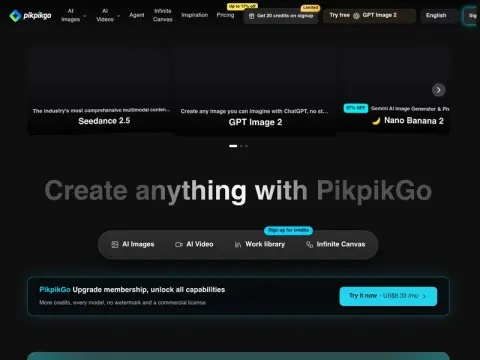
PikpikGo puts many mainstream generative models into an infinite canvas. Currently available options include Seedance, Sora, Veo, Wan, Vidu, Runway, GPT Image, and Nano Banana, covering both images and videos.
The form of canvas solves the problem of creative process. The traditional method is to open a web page for each model, and the generated materials are scattered everywhere; here you can put the reference pictures, intermediate drafts and final films of the entire project in the same space for comparison, and select a certain one to continue generating. For those who do storyboarding and multiple versions of drafts, what they save is the time of switching back and forth and filing.
It is directly connected to the official interfaces of various companies, so the quality of the pictures is basically the same as that produced by the original factory. The difference is that the billing is based on the in-site quota. It’s free to try, and advanced capabilities require a subscription.
The disadvantage is that there are many models and the parameter system is not unified. It takes a while to figure out which model is good at what when you first get started.
If you use it to make an AI short play, you can go to the script and storyboard firstTVLabFind: There are plot breakdowns of popular overseas short plays, rhythm tables of short play routines, and inspiration cards with split scenes. You can copy them and use them as prompts.